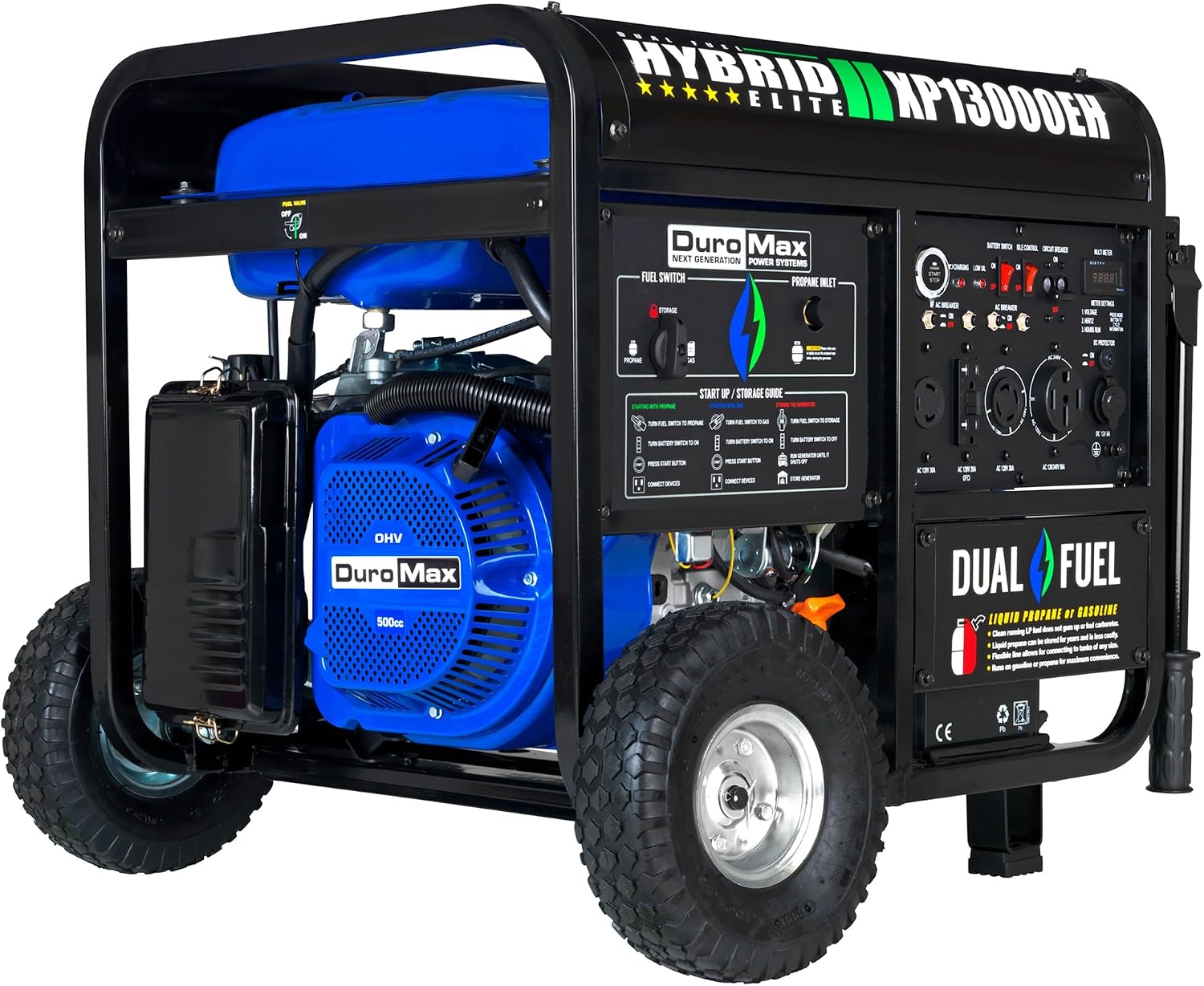
Marcus had been running a 30-foot trailer out of Austin for two seasons when he signed a contract for a full enclosed truck build. His fabricator quoted a Cummins 15kW diesel generator — kilowatts (kW) are simply units of electrical power, the same way horsepower measures an engine — and Marcus assumed bigger was better, so he bumped it to a 20kW unit at a cost difference of about $4,800. Eighteen months later, he’d never once pulled more than 12kW at peak lunch service. That $4,800 delta was dead capital, and the larger unit added 340 extra pounds his chassis permit didn’t fully account for. Generator sizing sounds like an engineer’s problem. It isn’t. It’s a capital allocation problem that every operator ends up owning — one way or another.
This article walks through how to size a generator for a food truck build: how to calculate your real electrical load, what that math costs at different build tiers, and how to make a defensible decision before the fabricator locks in the spec.
Why Generator Sizing Is a Build-Cost Decision, Not Just a Tech Spec
Most operators approach generator sizing the way they approach selecting a fryer: pick the brand the fabricator recommends and move on. That works until it doesn’t. The generator is the single largest mechanical line item on most mid-tier builds — typically running $6,000–$18,000 installed — and it interacts with almost every other cost decision on the truck: chassis payload rating, fuel tank size, ventilation routing, and even your commissary compliance paperwork.
Undersizing causes real operational pain. An undersized generator — one that can’t meet your peak electrical demand — will trip its own circuit breaker mid-service, drop voltage to sensitive equipment like commercial induction ranges (which can damage control boards), and force you to stagger equipment startups in ways that slow ticket times. Restaurant Business Online’s coverage of mobile kitchen builds consistently flags generator undersizing as one of the top three reasons operators return to fabricators for mid-season retrofits, which routinely cost 40–60% more than getting the spec right during the original build.
Oversizing is subtler but real. A generator running consistently at 30–40% of its rated load — what engineers call “light loading” — burns fuel inefficiently, accumulates carbon buildup in diesel engines faster than a properly loaded unit, and adds unnecessary weight and purchase cost to the build. Per Cummins Power Generation’s mobile application sizing guide, diesel generators run most efficiently and cleanly between 70–80% of rated load.
The goal is to land your generator at a size where peak demand sits around 75–80% of rated capacity, with a reasonable margin for equipment you might add later.
How to Calculate Your Actual Electrical Load
This is the math most operators skip, and it’s not complicated. Every piece of electrical equipment has a nameplate rating measured in watts (W) or amps (A). If the nameplate shows amps, convert: Watts = Amps × Volts (most commercial equipment runs on 120V or 240V circuits).
There are two loads you care about: running load (what the equipment draws during steady operation) and starting load (the brief surge when a motor or compressor kicks on — typically 2–3× the running load). Your generator has to handle the starting surge without tripping.
Here’s a simplified load sheet for a mid-tier taco/burger truck:
By the Numbers — Sample Peak Load Calculation
| Equipment | Running Watts | Starting Surge |
|---|---|---|
| Flat-top griddle (240V, 5kW) | 5,000 W | 5,000 W (resistive, no surge) |
| Commercial 2-door refrigerator | 600 W | 1,800 W |
| Undercounter freezer | 500 W | 1,500 W |
| Commercial exhaust hood fan | 800 W | 2,400 W |
| POS system + lighting | 400 W | 400 W |
| Total running load | 7,300 W / 7.3 kW | — |
| Peak starting demand | — | ~11,100 W / 11.1 kW |
A generator must handle the starting demand without voltage drop. This sample truck needs a generator rated for at least 12–13 kW to run comfortably, accounting for that starting surge and allowing some headroom. A 15kW unit puts this operator right in the 70–80% efficiency zone at peak, which is exactly where you want to be.
Add equipment, recalculate. Every fryer, induction burner, heated holding cabinet, or commercial blender you add changes this number. Do this exercise with your actual equipment list before your fabricator spec meeting, not after.
Build-Cost Math Across Three Generator Tiers
Here’s where the capital decision gets concrete. Generator pricing in 2026 has stabilized after the supply-chain volatility of 2022–2024, but installed costs still vary significantly by brand tier, fuel type, and how the unit integrates with your build.
Entry tier: 8–12 kW, $3,500–$7,000 installed Brands commonly specified at this tier include Generac’s commercial mobile line and Kubota’s RV-adjacent diesel units. These work well for simpler menus — a crepe trailer, a hot dog cart upgrade, a single-fryer concept — where peak loads stay under 9kW and the operator is price-sensitive. Food Truck Empire’s overview of generator costs notes that single-fryer operations can comfortably run on a well-sized 10kW unit. The risk: if your menu or catering volume grows, retrofitting is expensive.
Mid-tier: 13–20 kW, $7,500–$14,000 installed This is the workhorse range for most full-service food trucks. Cummins, Kohler, and Onan (a Cummins brand) dominate fabricator specs at this tier. A 15kW diesel Onan or Kohler installed by a fabricator like Prestige Food Trucks or Cruising Kitchens typically runs $9,000–$12,000 fully integrated — including the generator enclosure, fuel line routing, exhaust, and load center wiring. QSR Magazine’s 2025 mobile kitchen trend coverage notes that 15kW has become a de facto standard spec for full-service builds in the $100,000–$180,000 range because it accommodates most single-fryer, single-griddle setups with room to grow.
Premium / high-demand tier: 20–30 kW, $13,000–$22,000 installed Operators running two fryers, commercial salamanders, high-output exhaust systems, and full HVAC (roof-mounted air conditioning can alone pull 3–5kW) need to be in this range. Diesel units from Cummins (the QD series), Kohler’s mobile line, and Fischer Panda’s marine-derived compact units are commonly specified here. The Fischer Panda units, in particular, are popular with custom high-end builds where noise ordinance compliance is a hard constraint — they run significantly quieter than standard open-frame diesels, which matters increasingly as city permit requirements tighten around generator decibel limits.
One note on propane: some operators — particularly those operating in markets with aggressive diesel emissions rules or indoor/covered event venues — specify liquid propane (LP) generators. The installed cost is comparable to diesel at equivalent kW ratings, but LP generators generally have lower power density (you need a larger unit to get the same output), and LP fuel logistics on a mobile platform add complexity. Per SBA.gov’s mobile food vendor guidance, LP setups are worth evaluating specifically if your primary venues are enclosed or if your jurisdiction has diesel idle-time restrictions.
The Three Tradeoffs Nobody Explains Upfront
1. Weight vs. power Every kilowatt of generator capacity adds roughly 3–5 pounds of installed weight (the unit itself plus enclosure, mounting hardware, and wiring). A 20kW diesel generator system can run 700–900 lbs installed. If your chassis is already approaching its GVWR (Gross Vehicle Weight Rating — the maximum total weight the vehicle is legally permitted to carry), adding generator mass may force a chassis upgrade. On a Class 6 or Class 7 truck, a chassis bump can add $8,000–$15,000 to the build. That changes your generator-sizing math significantly.
2. Noise ordinance exposure This is the regulatory drift issue that Entrepreneur.com’s food truck startup coverage flagged in late 2024 and that’s only gotten more acute since: municipalities from Austin to Portland to Chicago are tightening generator noise limits, typically capped at 65–72 dB(A) at 50 feet during service hours. Standard open-frame diesel generators at full load run 72–78 dB(A). If you’re building for urban markets with event permits, a sound-attenuated enclosure or a low-noise generator specification is increasingly non-optional — and it adds $800–$2,500 to the build. Know your target markets before you spec.
3. Shore power compatibility Most fabricators offer shore power hookups — a connection that lets you plug into a venue’s electrical grid instead of running your generator. This is standard on catering-heavy builds and increasingly expected by event venues and corporate catering clients. A proper shore power inlet with automatic transfer switch (the switch that safely transitions between shore power and generator without surging your equipment) adds $600–$1,200 installed. If you’re building for the event and corporate catering market, skipping this is a mistake you’ll pay for in lost venue contracts.
The Decision Rule
If you’ve read this far and you’re sitting with a build spec in front of you, here’s the framework:
If your peak load calculation lands under 9 kW and your menu is unlikely to expand → spec a 10–12kW unit, keep the weight down, and reinvest the savings in equipment quality elsewhere.
If your peak load lands between 9–14 kW, or you’re building a full-service truck with realistic growth plans → 15kW is your anchor. Don’t let a fabricator talk you down to 12kW to cut the quote, and don’t let yourself talk up to 20kW out of anxiety. Run the load sheet numbers, land at 75–80% utilization, and hold that line.
If you’re running two fryers, full HVAC, or building for a catering market that prioritizes quiet operation → you’re in the 20–25kW range, and the noise and weight tradeoffs need to be resolved at the design stage, not retrofitted.
If your primary revenue channel is event and corporate catering → build shore power in from day one. The automatic transfer switch cost is trivial relative to the venue access it preserves.
The generator is not the exciting line item on your build sheet. But it’s the one that everything else plugs into — literally. Getting this number right in the contract phase costs you a few hours of homework. Getting it wrong can cost you a retrofit, a chassis upgrade, or a lost permit. Run the load sheet. Hold the spec.